
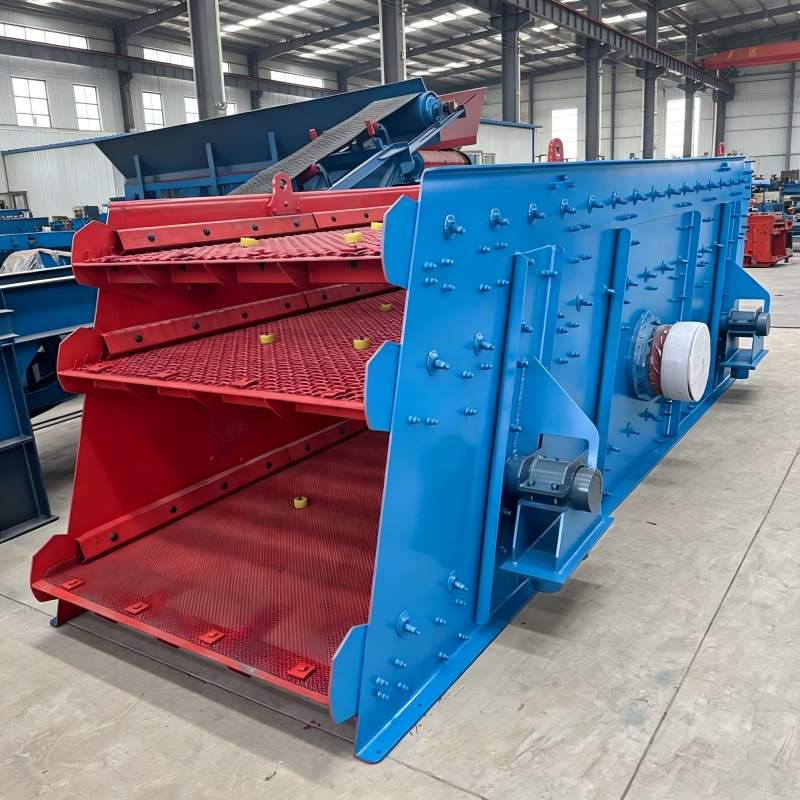
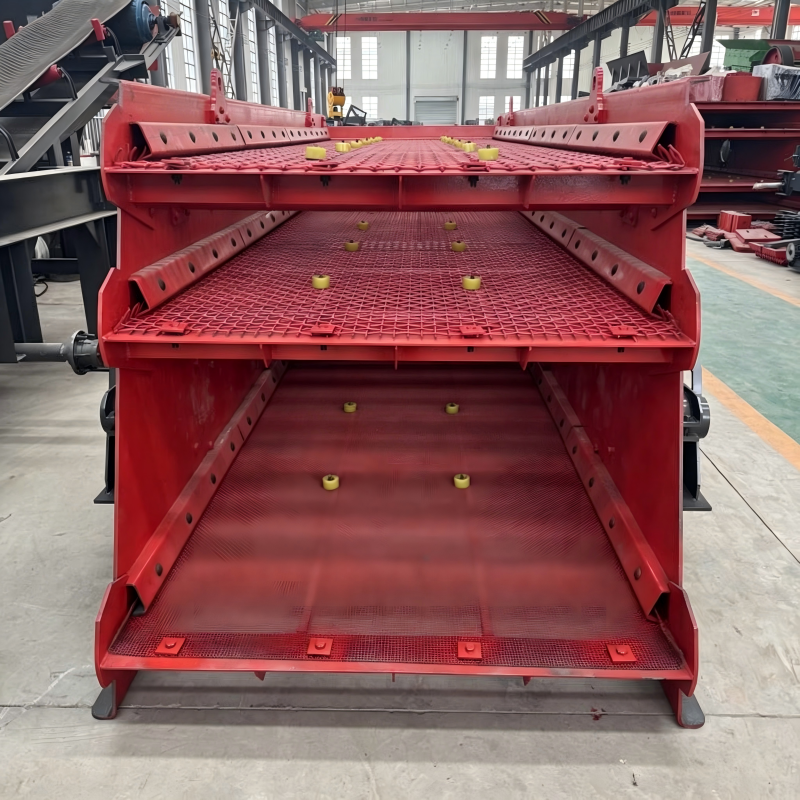
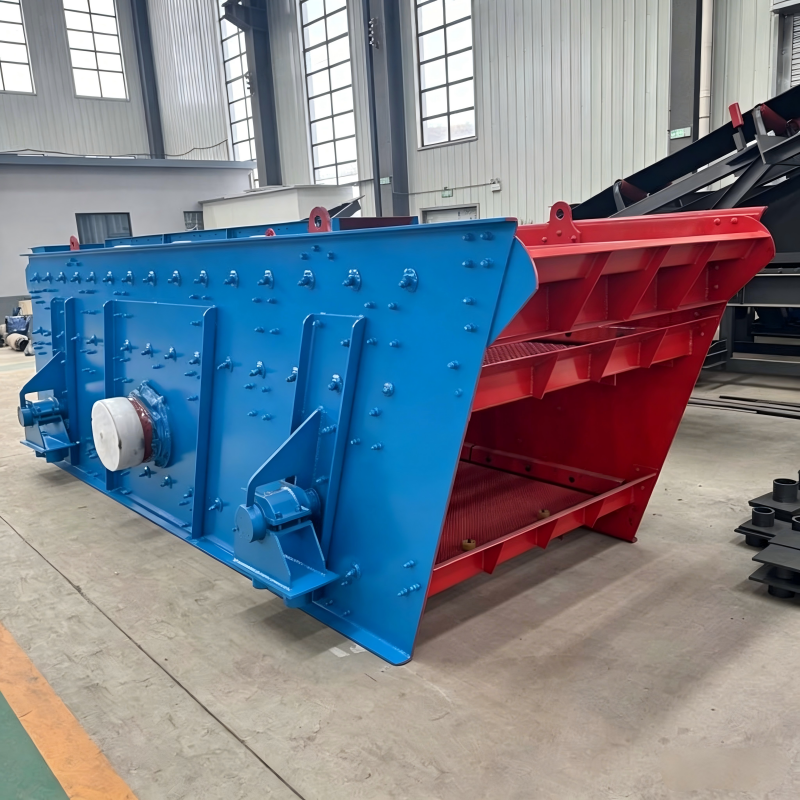
Circular Motion Inertial Vibrating Screen
This type of vibrating screen uses the inertial force generated by the rotation of a single-shaft exciter to force the screen box to vibrate. The motion trajectory of the screen box is circular or elliptical.
Circular motion inertial vibrating screens can be further divided into pure vibrating screens and self-centering vibrating screens. In a pure vibrating screen [Figure 3-10 (a)], the bearing center and the pulley center are located on the same straight line. When the screen is in operation, the pulley vibrates together with the screen box. As a result, not only is the amplitude of the screen limited (generally not exceeding 3 mm), but the repeated stretching and contraction of the V-belt also makes the belt prone to damage. In a self-centering vibrating screen [Figure 3-10 (b)], the center of the pulley is not aligned with the bearing center; instead, it lies between the bearing center and the center of gravity of the eccentric block, maintaining the following balance relationship:
MA = mr (3-6)
where:
M — total mass of the screen box and the load;
A — amplitude of the screen box;
m — mass of the eccentric block;
r — distance from the center of gravity of the eccentric block to the axis of rotation.
When the screen is in operation, the screen frame performs a circular motion with an amplitude A around the axis 0-0, while the axis of the pulley only rotates and remains stationary in space. This type of screening machine overcomes the drawback of the pulley vibrating together with the screen box.
Currently, the self-centering vibrating screen has gained the most widespread application.
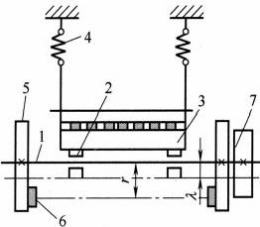
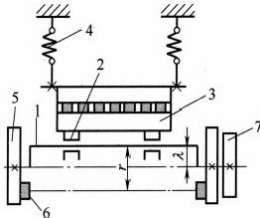
(a) Pure vibrating screen (b) Self-centering vibrating screen
Figure 3-10 Schematic diagram of the circular motion inertial vibrating screen structure
1—Main shaft; 2—Bearing; 3—Screen box; 4—Suspension spring (or rod spring); 5—Disc; 6—Eccentric block; 7—Pulley
Figure 3-11 shows a domestically produced 1500 mm × 4000 mm suspended self-centering vibrating screen. The screen box is suspended from the floor slab of the workshop or from a support frame by four suspension rods equipped with springs. The screen box consists of the screen frame, screen surface (mesh), and a clamping device. The screen surface is fitted with either a single layer or double layers of screen mesh. The inclination angle of the screen box ranges from 15° to 20°. The eccentric shaft type exciter is mounted on the steel plates of the side walls of the screen box via bearing housings, as shown in Figure 3-12. On the main shaft of the exciter, in addition to an eccentric weight that protrudes in one direction, there are also a pulley and a disc fitted with eccentric blocks at both ends of the shaft. The amplitude of the screen box can be adjusted by increasing or decreasing the eccentric blocks on the pulley and the disc. When the main shaft rotates, the exciting force generated by the rotation of the exciter causes the screen box to vibrate in a circular trajectory. At this time, the weight of the eccentric blocks on the disc should be such that the inertial centrifugal force they generate can balance the inertial centrifugal force produced by the rotating screen box (with the radius of rotation equal to the working amplitude of the screen box), as shown in Formula (3-6). In this way, the screen frame performs a circular motion around axis 0-0, while the center of the pulley remains stationary in space. Therefore, this type of vibrating screen is called a self-centering vibrating screen.
The technical characteristics of domestically produced circular motion vibrating screens are listed in Table 3-9 [12].
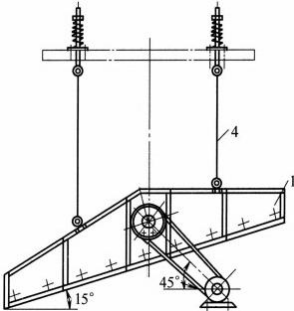
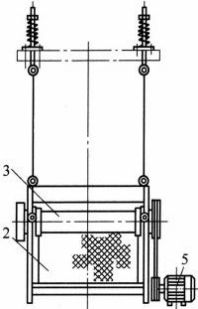
Figure 3-11 1500 mm × 4000 mm suspended self-centering vibrating screen
1—Screen box; 2—Screen mesh; 3—Exciter; 4—Spring suspension rod; 5—Bearing housing
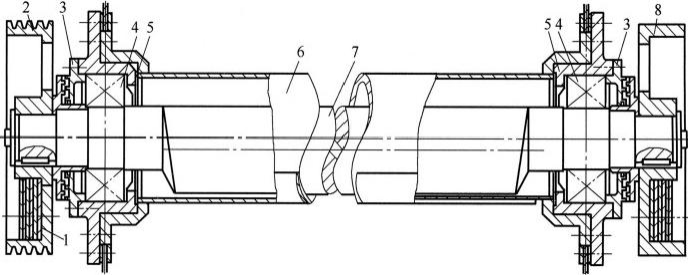
Figure 3-12 Exciter of the self-centering vibrating screen
1—Eccentric block; 2—Pulley; 3—Bearing end cover; 4—Rolling bearing;
5—Bearing housing; 6—Cylinder (or cylindrical sleeve); 7—Main shaft; 8—Disc
Table 3-9 Technical characteristics of domestically produced circular motion vibrating screens
| Model | Deck | Area (m²) | Incl. (°) | Mesh size (mm) | Feed size (mm) | Capacity (t/h) | Vibration frequency (r/min) | Double amplitude (mm) | Power (kW) |
| ZD918 | 1 | 1.6 | 20 | 1–25 | ≤60 | 10–30 | 1000 | 6 | 2.2 |
| 2ZD918 | 2 | ||||||||
| ZD1224 | 1 | 2.9 | 20 | 6–40 | ≤100 | 70–210 | 850 | 6–7 | 4 |
| 2ZD1224 | 2 | ||||||||
| ZD1530 | 1 | 4.5 | 20 | 6–50 | ≤100 | 90–270 | 920 | 6–7 | 5.5 |
| 2ZD1530 | 2 | 850 | |||||||
| ZD1540 | 1 | 6 | 20 | 6–50 | ≤100 | 90–270 | 850 | 7 | 7.5 |
| 2ZD1540 | 2 | ||||||||
| ZD1836 | 1 | 6.5 | 20 | 6–50 | ≤150 | 100–300 | 850 | 7 | 11 |
| ZD1836J | 1 | 6.5 | 20 | 43×58 / 87×104 | ≤150 | 100–300 | 850 | 7 | 11 |
| ZD2160 | 1 | 12 | 20 | 10–50 | ≤150 | 240–540 | 900 | 8 | 22 |
Note: The capacity values are reference values, calculated based on ore with a bulk density of 1.2 kg/m³.
For screening coarse-grained, high-density materials, a floor-mounted (base-mounted) self-centering heavy-duty vibrating screen is typically used. This type of vibrating screen also employs a pulley-eccentric exciter.
Linear Motion Inertial Vibrating Screen
The linear motion inertial vibrating screen is a type of linear vibrating screen. The vibration of the screen box is generated by an exciter. The exciter has two main shafts (Figure 3-13), each equipped with eccentric blocks of equal mass, rotating at the same speed but in opposite directions (usually, two gears are meshed to ensure synchronous rotation of the two shafts). As shown in Figure 3-13, regardless of the position of the two eccentric shafts, the components of the centrifugal forces F (F = m r ω², where m and r are the mass and radius of gyration of the eccentric block, respectively, and ω is the angular velocity) produced by each eccentric block in the X-axis direction cancel each other out, while the components in the Y-axis direction superimpose to form a reciprocating excitation force AB, causing the screen box to produce a reciprocating, linear-trajectory vibration in the Y-axis direction.
Linear motion inertial vibrating screens are available in both suspended and floor-mounted (base-mounted) types. Figure 3-14 shows a suspended linear motion vibrating screen. This type of screening machine uses a box-type exciter. The exciter has a compact structure, with four eccentric blocks arranged in pairs outside the box. Inside the box, there are two gears, which not only transmit motion but also ensure that the two pairs of eccentric blocks rotate at the same speed and in opposite directions, causing the screen to perform linear vibration.